
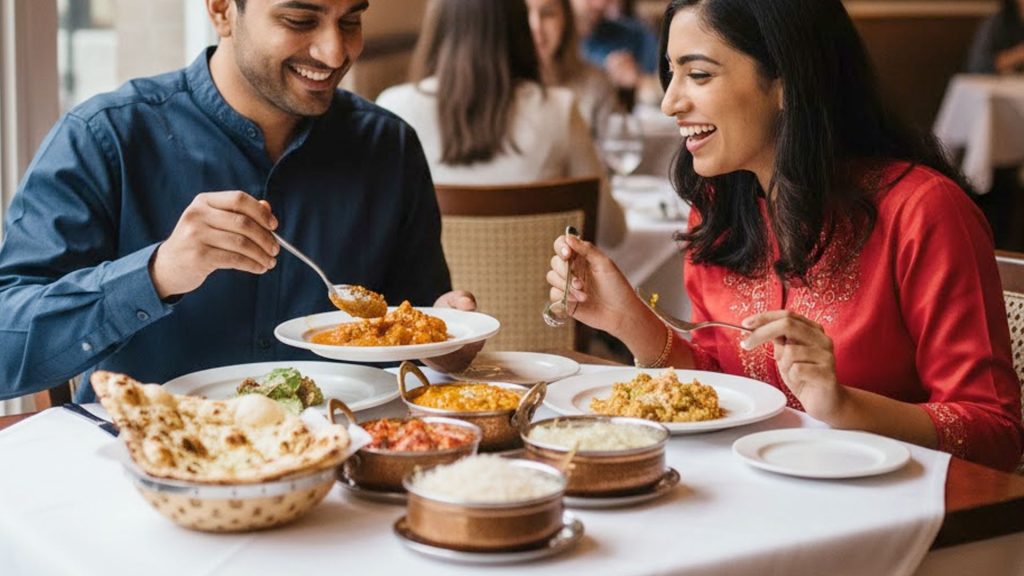
Indian vs Bangladeshi restaurant food shares many similarities, but there are some clear differences.
Indian cuisine is broader in range and more widely recognised, with familiar dishes such as tikka masala, korma, jalfrezi and biryani. In restaurant settings, it often leans towards richer sauces, layered spice and, depending on the dish, cream or butter.
Bangladeshi cuisine, by contrast, tends to be simpler and more ingredient-led. It often uses less dairy and relies more on fresh chillies, mustard oil, fish, lentils and vegetables. The flavours can feel sharper, less sweet and less dominated by sauce.
In the UK, the distinction is not always obvious. Many restaurants described as Indian are run by Bangladeshi chefs, which is why menus often overlap. The difference usually becomes clearer when a restaurant offers traditional Bangladeshi dishes or regional fish-based specials that do not commonly appear on a standard Indian menu.
Neither style is better. It usually comes down to taste. Some people prefer the richer, more familiar style of Indian restaurant dishes, while others prefer the cleaner, more robust flavours often found in Bangladeshi cooking.
Example Dishes from Each
Common Indian restaurant dishes
Chicken Tikka Masala
Butter Chicken
Korma
Jalfrezi
Rogan Josh
Biryani
Saag Paneer
Tandoori Chicken
Naan and Pilau Rice
Common Bangladeshi dishes
Chicken or Lamb Bhuna
Chicken or Lamb Dansak
Fish Bhuna
Chingri (prawn curry)
Shatkora curry
Dal
Vegetable curry with mustard oil
Bhorta
Fish curry with rice
A Simple Rule of Thumb
Indian food often means richer sauces, more dairy and the curry-house dishes most people know well.
Bangladeshi food often means more fish, lentils, mustard oil and flavours that feel sharper and less heavy.
